
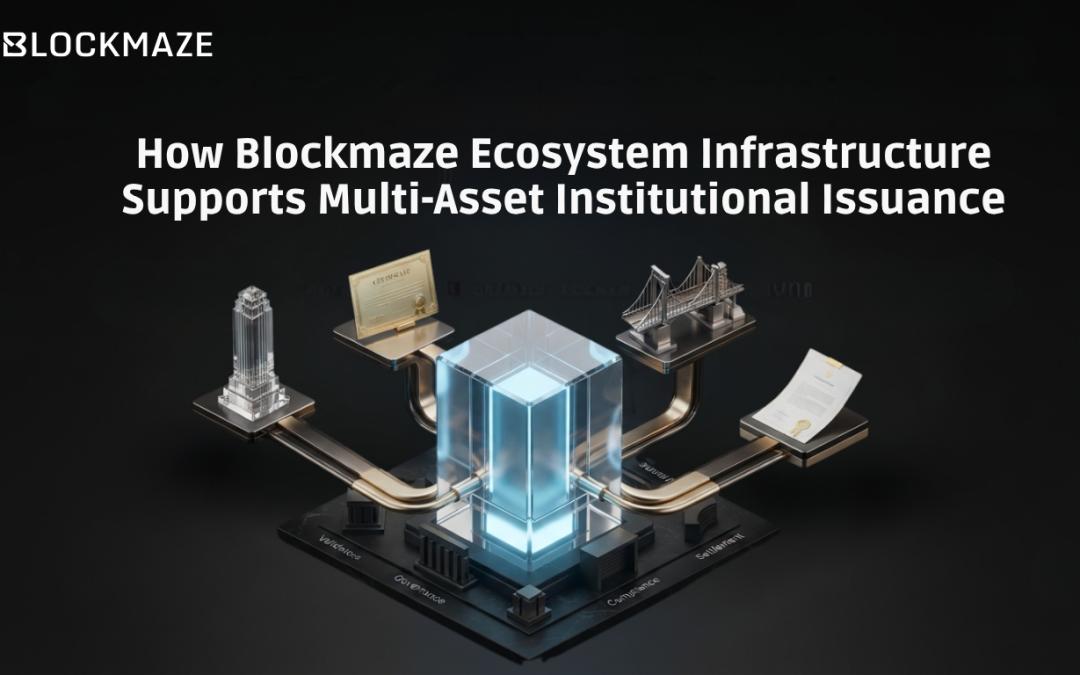
Ask a tokenization platform whether it supports multiple asset classes, and almost every serious platform will say yes. Bonds, funds, real estate, commodities, private credit — the asset class list has become a standard feature comparison across the industry. But asset class breadth answers a narrower question than institutional issuers actually need answered. The harder question is whether the infrastructure can support genuinely different financing structures — not just different labels on similar mechanics, but structures with fundamentally different capital release timing, different investor rights, and different governance requirements.
Asset Class Breadth vs Structural Flexibility
Most tokenization platforms achieve multi-asset support by building a flexible token standard that can represent different underlying assets with similar mechanics: an eligibility check, a transfer restriction, an income distribution schedule. This works well when every asset, regardless of type, behaves similarly after issuance — money arrives from a known source (a coupon, a rent payment, a dividend) and gets distributed to token holders on a defined schedule.
This model breaks down for capital formation structures financing projects that do not yet exist. A tokenized bond has a known coupon and a known maturity from day one. An infrastructure project seeking $150 million in construction financing has neither — it has a capital need, a construction timeline with milestones, and a capital structure that likely includes multiple tranches with different risk and return profiles: senior debt-like capital that gets repaid first, an anchor investor’s equity-like participation, and potentially revenue-share arrangements for smaller co-investors once the project is operational. None of this resembles the coupon-and-maturity structure that most tokenization infrastructure is built around.
What Structural Flexibility Actually Requires
Capital Release Mechanics That Are Not One-Size-Fits-All
A bond token needs to distribute income on a fixed schedule. A capital formation structure financing a construction project needs to release capital to the project sponsor in tranches tied to verified milestones — and then, once operational, potentially distribute revenue share to investors on an entirely different schedule than the capital release phase. Infrastructure that can only handle the first pattern cannot support the second, regardless of how many asset class labels it offers.
Investor Rights That Vary by Tranche and by Participant Type
An anchor investor providing the first, largest tranche of capital to a project typically negotiates different terms than a smaller co-investor joining afterward on the strength of the anchor’s due diligence. Genuinely multi-structure infrastructure needs to support differentiated investor rights within a single financing structure not force every participant into identical terms because the underlying token standard was not built to differentiate.
Governance That Adapts to the Structure, Not the Reverse
A tokenized bond typically requires minimal ongoing governance — the terms are fixed at issuance. A multi-year infrastructure financing requires governance capable of handling scope changes, delays, disputes between the sponsor and investors, and potentially restructuring if the project’s timeline or budget shifts materially. Infrastructure built only for the low-governance-need case cannot simply be stretched to handle the high-governance-need case without fundamentally different underlying architecture.
Why This Matters for the Verticals Blockmaze Is Expanding Toward
Infrastructure development, private business growth capital, and large capital-intensive ventures each have distinct financing structure requirements that differ meaningfully from tokenizing an existing bond or building. An infrastructure project needs milestone-tied capital release. A growth-stage private business might need revenue-based financing structures that scale repayment with actual business performance rather than fixed schedules. A large capital-intensive venture in a sector like deep tech might need patient capital structures that accommodate multi-year development timelines before any return materialises at all.
Multi-asset infrastructure that can genuinely support this range of structures — not merely issue tokens labelled ‘infrastructure,’ ‘business,’ or ‘venture’ but actually accommodate the different capital mechanics each requires — is structurally different from infrastructure built primarily to represent finished, income-generating assets. This is the distinction that determines whether an institutional issuer with a genuinely novel financing need can be served by existing infrastructure or requires custom-built arrangements outside the platform entirely.
The Compliance Layer Stays Constant Even When the Structure Changes
What should not vary across different financing structures is the compliance and verification layer. Whether the underlying instrument is a tokenized bond or a milestone-based infrastructure financing structure, the same eligibility enforcement, the same jurisdiction-specific transfer restrictions, and the same independent reserve or milestone verification cycle should apply. This consistency is what allows an institutional investor to evaluate the compliance quality of the infrastructure once, rather than re-evaluating it separately for every different type of instrument they encounter on the same network.
Frequently Asked Questions
What is the difference between asset class breadth and structural flexibility in tokenization infrastructure?
Asset class breadth means a platform can issue tokens representing different asset types — bonds, funds, real estate — using similar underlying mechanics. Structural flexibility means the infrastructure can support genuinely different capital release timing, investor rights, and governance requirements, which matters specifically for financing structures like infrastructure projects that do not resemble a standard bond or fund.
Why can’t existing bond or fund tokenization infrastructure simply be extended to infrastructure project financing?
Bond and fund tokens typically have fixed income distribution schedules established at issuance. Infrastructure project financing requires capital release in tranches tied to verified milestones, differentiated investor rights between an anchor investor and smaller co-investors, and governance capable of handling scope changes and disputes over a multi-year build — none of which the standard bond/fund mechanics are built to accommodate.
What does milestone-based capital release require structurally?
It requires independent verification that a project milestone has been achieved before the next tranche of capital is released — extending the same reserve attestation infrastructure used to verify asset backing into a mechanism for verifying project progress.
Does the compliance layer change across different financing structures?
No — the same eligibility enforcement, transfer restrictions, and jurisdiction-specific compliance rules should apply consistently regardless of whether the underlying instrument represents a finished asset or a capital formation structure financing a project in progress.
What kinds of projects need genuinely multi-structure infrastructure rather than standard asset tokenization?
Infrastructure development, private business growth capital, and large capital-intensive ventures such as deep tech projects typically need financing structures — milestone-tied capital release, revenue-based repayment, patient capital timelines — that differ meaningfully from tokenizing an existing, finished, income-generating asset.